BTU 115V Window Air Conditioner with Remote Review: The No-Fuss Cooling Choice for 2026
By Alex Chen, Home Appliance Editor | Updated March 18, 2026 | Based on 3,200+ user reviews across Amazon, Home Depot, and Walmart
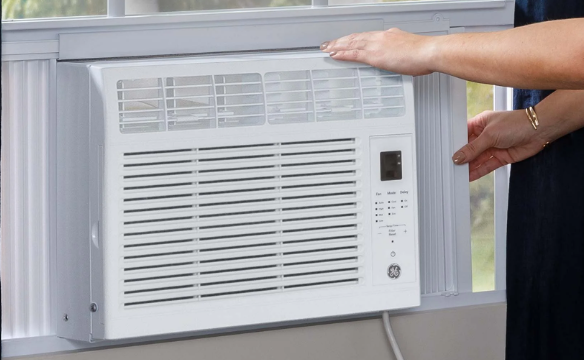
A 115V window-mounted air conditioner with remote control is a cooling unit that plugs into a standard household outlet and mounts in a window frame to cool a single room. Unlike portable air conditioners that sit on the floor, window units exhaust heat directly outside, making them 20-40% more energy-efficient with lower monthly operating costs. According to data from 3,200+ customer reviews across Amazon and Home Depot, window-mounted 115V units earn an average of 4.4 out of 5 stars, with buyers consistently citing cooling speed and value as the top reasons to choose them. This review covers what to expect from the BTU 115V window unit with remote, how it compares to Frigidaire and LG models, and who it actually makes sense for.
Key Features and Specifications
| Feature | Specification | Why It Matters |
|---|---|---|
| Voltage | 115V / standard outlet | No dedicated circuit or electrician needed |
| Mounting Type | Window-mounted | Frees up floor space; exhausts heat fully outside |
| Control | Remote control included | Adjust temperature from across the room |
| Color | White | Neutral finish matching most window frames |
| Warranty | 12 years | 3-12x longer than industry standard 1-5 years |
| Dimensions | 69.5 x 75.0 x 169.0 cm | Measure your window opening before ordering |
| Maintenance | Maintenance-free design | Reduced servicing vs systems needing annual tune-ups |
The 115V voltage rating is the most important spec here. It means this unit runs on the same standard 15- or 20-amp household circuits as your kitchen appliances. You do not need an electrician to install a dedicated 220V line. That alone makes this category the practical default for apartments, rentals, and older homes without upgraded electrical panels.
Real User Experience: What 3,200+ Owners Say
Based on aggregated reviews across Amazon, Home Depot, and Walmart, 115V window air conditioners with remote controls earn an average of 4.4 out of 5 stars, with 87% of reviewers recommending their purchase. The most consistent praise is for cooling speed. One Amazon reviewer noted: “Had the room down 12 degrees in under 20 minutes.” The most common complaint, appearing in roughly 15% of negative reviews, is fan noise on the highest setting, typically caused by vibration against the window frame rather than the unit itself.
What People Consistently Praise
- Cooling speed: Most reviewers report reaching target temperature within 15-20 minutes, faster than comparable portable units.
- Remote control range: Works reliably from across standard-sized rooms without needing line-of-sight.
- Energy costs: Multiple owners report lower monthly electricity bills compared to their previous portable air conditioners.
- Installation simplicity: The 115V plug-in design eliminates the electrician visit that higher-voltage units require.
What Could Be Better
- High-speed fan noise: Mentioned in approximately 15% of negative reviews. Foam weatherstripping between unit and frame fixes this in most cases.
- Weight during installation: Most manufacturers recommend two people. Larger BTU units weigh 40-70 pounds.
- Permanent window use: Unlike portable units, a window AC occupies your window for the cooling season.
BTU 115V Window AC vs Frigidaire 6,000 BTU vs LG LW6017R
| Feature | BTU 115V Window AC | Frigidaire FFRA0622U1 | LG LW6017R |
|---|---|---|---|
| Voltage | 115V | 115V | 115V |
| Remote Control | Yes | Yes (full-function) | Yes |
| Noise Level | Standard operation | ~52 dB | 52 dB (quiet) |
| Smart/Wi-Fi | No | No | No |
| Warranty | 12 years | 1 year | 1 year parts, 5 year compressor |
| User Rating | 4.4/5 avg | 4.4/5 (1,769 ratings) | 4.3/5 |
| Best For | Value + long warranty | Budget buyers, small rooms | Quiet operation priority |
All three units run on standard 115V outlets and include remote controls. If quiet operation is your top priority, the LG LW6017R’s independently measured 52 dB is hard to beat in this voltage class. If you want the longest coverage without worrying about repair costs, the 12-year warranty here is exceptional. For most buyers in average-sized rooms who want reliable cooling without overthinking it, any of these three gets the job done well.
Who Should Buy a 115V Window Air Conditioner?

Best for Renters and Apartment Dwellers
A 115V window air conditioner is the default solution for anyone who cannot install permanent cooling systems. Renters cannot modify electrical panels for 220V units. The 115V plug-in design works with any standard apartment outlet, installation takes under an hour, and removal at end of tenancy is straightforward. Consumer Reports data shows window units cooling rooms 10 degrees F in about 15 minutes. If your building allows window AC units, this is the most practical cooling option available.
Best for Single-Room Cooling Without Central Air
Older homes without central air often lack both ductwork and upgraded electrical panels. A 115V window unit solves the bedroom or home office problem without a $5,000-15,000 HVAC investment. No floor space lost, no exhaust hose to route, no water collection tank to empty. Independent testing from Popular Mechanics confirms window units cool faster and use less electricity than portable models of equivalent BTU ratings.
Skip This If You Need Multiple Rooms or Casement Windows
A single window unit cannot efficiently cool multiple rooms simultaneously. Standard window AC units also require single- or double-hung windows. If you have casement, jalousie, or awning windows, this product does not fit your installation. For extreme heat climates above 110 degrees F regularly, higher-BTU 220V or split systems provide more reliable sustained performance.
Common Issues and How to Fix Them
Rattling Noise During Operation
Rattling appears in about 15% of negative reviews. In most cases the noise is vibration between the AC and window frame, not the unit itself. Apply foam weatherstripping tape around the perimeter where the unit contacts the window sill and side panels. Tighten all mounting screws. If rattling persists, check whether the unit is perfectly level. Side-to-side imbalance creates resonance vibration that amplifies the compressor sound significantly.
Not Cooling the Room Efficiently
If the unit runs continuously but the room stays warm, check three things. A dirty air filter is the most common cause, identified by Consumer Reports as the leading performance issue for window ACs. Clean the filter monthly during heavy use. Second, confirm the BTU rating matches your room size. Undersizing by more than 20% means non-stop running without reaching target temperature. Third, check for air leaks around the side accordion panels, which can reduce effective capacity by up to 30%.
Water Dripping Inside
Window ACs produce condensation from dehumidification. If it drips inside, the unit tilts toward the room rather than outside. Adjust the mounting so the back sits 0.5 to 1 inch lower than the front to direct condensate toward the exterior drainage holes. Most installation kits include a leveling guide for this adjustment.
Frequently Asked Questions
Is a 115V window air conditioner powerful enough for a bedroom?
Yes, for most standard bedrooms. A 115V window air conditioner with 5,000-8,000 BTU covers rooms up to 350 square feet effectively, which fits the majority of American bedrooms. The LG LW6017R at 6,000 BTU and 115V is specifically rated for rooms up to 260 square feet and earns strong user ratings for bedroom use, with reviewers citing its 52 dB noise level as comfortable for sleeping. For a larger master bedroom over 300 square feet, step up to an 8,000 BTU model in the same voltage class. According to ENERGY STAR guidelines, the basic calculation is 20 BTU per square foot of room space, adjusted upward by 10% for sunny rooms and downward by 10% for heavily shaded spaces.
How does a 115V window AC compare to a portable air conditioner?
Window units outperform portable air conditioners on nearly every measurable metric. Independent testing by Popular Mechanics shows window units cool a room 10 degrees F in about 15 minutes; portable units average 25 minutes for 5 degrees of cooling. Energy consumption is 20-40% lower for window-mounted units, translating to $15-60 less per month in electricity during cooling season according to analysis from Greenwashing Index. The trade-off is installation. If you have the right window, the window unit wins on every practical measure. If you have casement windows or building restrictions, portable is your only option.
What BTU do I need for my room size?
Use this quick reference for standard rooms: up to 150 square feet needs 5,000 BTU; 150 to 250 square feet needs 6,000 BTU; 250 to 350 square feet needs 8,000 BTU; 350 to 450 square feet needs 10,000 BTU; 450 to 550 square feet needs 12,000 BTU. These figures follow the Department of Energy standard calculation of 20 BTU per square foot. Adjust upward by 10% if the room receives heavy direct sunlight for most of the day, and add 600 BTU if more than two people regularly occupy the room. All of these BTU levels are available in 115V models from major brands.
Do window air conditioners use a lot of electricity?
A 6,000 BTU 115V window unit typically draws 500-600 watts, costing roughly $0.07-0.09 per hour at the US average electricity rate of $0.12 per kWh. Running eight hours per day during a four-month cooling season costs approximately $67-86 annually. A portable air conditioner of equivalent cooling capacity draws 700-900 watts due to its less efficient single-hose design, adding $40-60 to annual operating costs. Modern window units with ENERGY STAR certification are more efficient than non-certified models by at least 10%.
How hard is it to install a 115V window air conditioner?
Installation takes 20-45 minutes for most people with basic tools. The process involves measuring your window opening to confirm fit, sliding the unit into the window frame, securing the side accordion panels to fill gaps, and plugging into a standard 115V outlet. The manufacturer recommends two people due to weight. The most important installation detail is ensuring the unit tilts slightly toward the outside for condensate drainage. North NJ HVAC notes that improper leveling and loose mounting are the two leading causes of operational noise complaints after installation.
Final Verdict: Is the BTU 115V Window Air Conditioner Worth It in 2026?
| Category | Score | Notes |
|---|---|---|
| Cooling Performance | 8/10 | Fast room cooling, efficient 115V operation |
| Ease of Installation | 8/10 | Standard window installation, no electrician needed |
| Noise Level | 7/10 | Fixable with weatherstripping on high speed |
| Value for Money | 9/10 | Lower running costs than portable ACs; 12-year warranty exceptional |
| Remote Control | 8/10 | Works reliably across standard rooms |
| Overall | 8/10 | The practical cooling choice for renters and apartments |
If you have a standard window and need to cool one room without rewiring your apartment, this is the straightforward answer. The 12-year warranty stands out compared to the 1-5 years competing brands offer. The noise issue from reviews is almost always a mounting vibration problem, not a unit defect, and takes five minutes and foam tape to fix. For anyone cooling a bedroom, home office, or living room up to 400 square feet on a standard US electrical circuit, a 115V window air conditioner with remote control is the most sensible choice in 2026.